
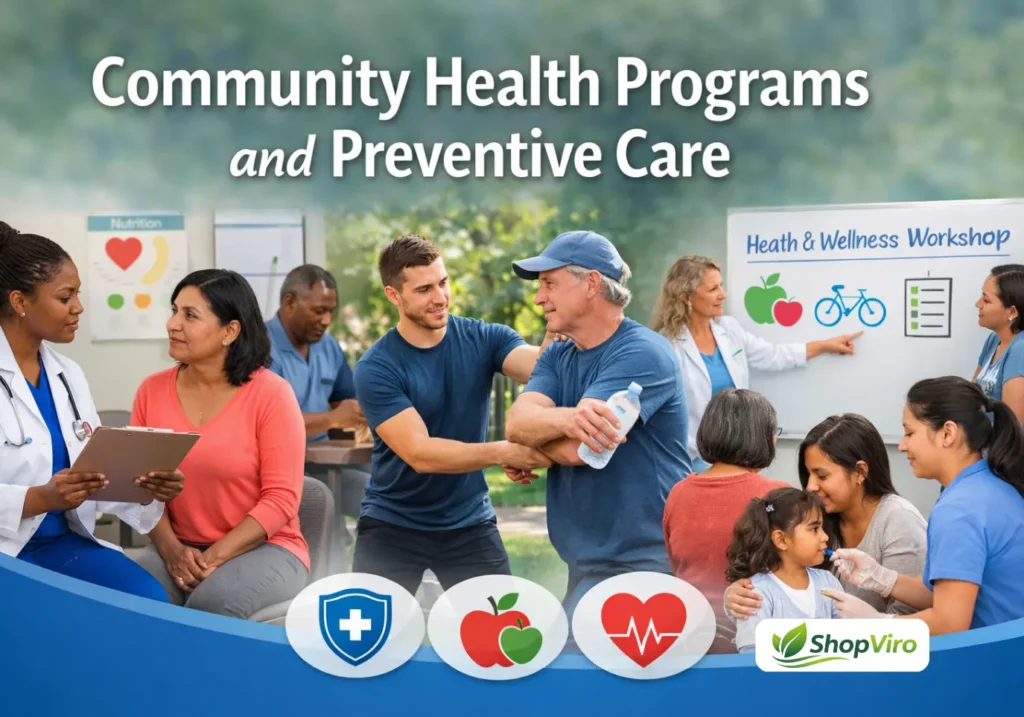
Community health programs are essential pillars of preventive care in the United States. These initiatives are designed to improve health outcomes before illness develops. As a result, they reduce disease burden, strengthen local resilience, and promote long-term well-being.
Across the country, community health programs operate in partnership with public health departments, nonprofit organizations, schools, faith-based groups, and federally qualified health centers. Because prevention is more effective and less costly than treatment, these programs focus on early intervention, education, screenings, and access to services.
More importantly, preventive care delivered at the community level reaches people where they live, work, and learn. Therefore, it addresses barriers such as transportation, cost, health literacy, and trust. If you want to understand how prevention works beyond hospitals and clinics, and how it shapes healthier neighborhoods, this guide will provide clear, evidence-based insight.
Preventive health is not a single service. Instead, it is a coordinated strategy. Through structured community health programs, prevention becomes practical, measurable, and sustainable.
Community Health Programs: Definition and Core Principles
Community health programs are organized efforts that promote health and prevent disease within specific populations. Unlike individual medical appointments, these programs focus on groups. They operate within defined geographic areas or communities of interest.
According to the Centers for Disease Control and Prevention (CDC), prevention strategies aim to reduce risk factors before illness develops. Similarly, Healthy People 2030, led by the U.S. Department of Health and Human Services (HHS), emphasizes community-based approaches to improve population health.
Core principles include:
- Equity and accessibility
- Evidence-based interventions
- Cultural responsiveness
- Collaboration across sectors
- Data-driven evaluation
Because health outcomes are shaped by social conditions, community health programs often address social determinants of health. These include housing stability, food access, education, transportation, and employment conditions.
The Role of Preventive Care in Public Health
Preventive care includes services that detect or reduce the risk of disease. It operates at three levels:
| Level of Prevention | Focus | Example in Community Settings |
|---|---|---|
| Primary Prevention | Prevent disease before it occurs | Vaccination drives, nutrition education programs |
| Secondary Prevention | Detect disease early | Blood pressure checks, cancer screening initiatives |
| Tertiary Prevention | Manage existing disease and prevent complications | Diabetes management workshops, rehabilitation programs |
Legend: Levels of disease prevention and practical applications in community-based health settings.
Because chronic diseases such as heart disease, diabetes, and cancer are leading causes of death in the U.S., preventive care is essential. The CDC reports that many chronic conditions are linked to modifiable behaviors. Therefore, community health programs target nutrition, physical activity, tobacco use, and preventive screenings.
Moreover, prevention reduces healthcare costs. Research from public health institutions consistently shows that early intervention lowers emergency visits and hospitalizations. Consequently, investment in prevention benefits both individuals and healthcare systems.
How Community Health Programs Operate in Practice
Community health programs operate through structured planning and partnerships. First, local health departments conduct community health assessments. These assessments identify priority issues based on data.
Next, stakeholders collaborate to design targeted interventions. These may include:
- clínicas móveis de vacinação
- Health education workshops
- School-based nutrition programs
- Faith-based health outreach
- Community fitness initiatives
Federally Qualified Health Centers (FQHCs), supported by the Health Resources and Services Administration (HRSA), play a central role. They provide preventive services regardless of a patient’s ability to pay. As a result, underserved populations gain access to essential care.
In addition, community health workers serve as trusted connectors. They provide culturally appropriate education and help individuals navigate the healthcare system. Because trust influences participation, this role is critical.
Evidence-Based Strategies Used in Community Health Programs
Effective programs rely on proven interventions. Institutions such as the National Institutes of Health (NIH) and the Community Preventive Services Task Force evaluate and recommend strategies.
Common evidence-based approaches include:
- Immunization campaigns
- Tobacco cessation programs
- Hypertension control initiatives
- Nutrition and physical activity interventions
- Maternal and child health support
For example, community blood pressure monitoring programs have shown improved hypertension control rates. Similarly, school-based physical activity programs contribute to healthier weight outcomes among children.
Importantly, programs are evaluated continuously. Data collection ensures accountability and improvement. Therefore, prevention remains adaptive and responsive to emerging needs.
Addressing Social Determinants Through Community Health Programs
Health does not exist in isolation. Instead, it is shaped by economic, environmental, and social factors. Healthy People 2030 identifies five key domains of social determinants:
- Economic stability
- Education access and quality
- Health care access and quality
- Neighborhood and built environment
- Social and community context
Community health programs integrate these factors into prevention planning. For instance, food access programs support nutrition education. Transportation partnerships improve access to preventive screenings.
Because inequities contribute to health disparities, community-based prevention promotes fairness. However, programs must remain culturally conscious. They should avoid stereotypes and instead rely on community input.
Engagement strategies often include:
- Community advisory boards
- Listening sessions
- Local leadership partnerships
- Faith and cultural organization collaboration
Through this approach, prevention becomes participatory rather than imposed.
Community Health Programs and Chronic Disease Prevention
Chronic diseases account for significant healthcare costs in the United States. Therefore, prevention at the community level is essential.
Community health programs often target:
- Cardiovascular disease
- Type 2 diabetes
- Obesity
- Cancer prevention
- Respiratory diseases
For example, the CDC’s National Diabetes Prevention Program supports community-based lifestyle change programs. These structured programs focus on weight management, physical activity, and nutrition. Studies show that participants can reduce their risk of developing type 2 diabetes.
Similarly, community tobacco control policies have reduced smoking rates nationwide. Because policy interventions complement education efforts, multi-level strategies are more effective.
Mental Health and Preventive Community Initiatives
Preventive care also includes mental health promotion. Community health programs increasingly integrate behavioral health strategies.
Examples include:
- School-based mental health education
- Suicide prevention awareness campaigns
- Community resilience workshops
- Peer support groups
The Substance Abuse and Mental Health Services Administration (SAMHSA) emphasizes early intervention. Because mental health conditions often begin early in life, prevention in schools and community centers is crucial.
Moreover, stigma reduction campaigns increase help-seeking behavior. Therefore, community engagement directly supports early detection.
Measuring Success in Community Health Programs
Evaluation ensures that programs achieve measurable outcomes. Public health agencies use performance indicators such as:
- Vaccination rates
- Screening completion rates
- Chronic disease control metrics
- Behavioral change indicators
Data sources may include local health surveys, electronic health records, and national surveillance systems.
Additionally, cost-effectiveness analyses measure economic impact. Because prevention reduces long-term medical costs, data often supports continued funding.
Transparency also strengthens public trust. When communities see measurable improvements, participation increases.
Why Community Health Programs Matter for Long-Term Prevention
Community health programs create sustainable health improvement. Unlike isolated medical visits, they build ongoing support systems.
Key long-term benefits include:
- Reduced disease incidence
- Improved quality of life
- Stronger health literacy
- Lower healthcare costs
- Increased community resilience
Furthermore, prevention fosters intergenerational impact. Children exposed to healthy environments often carry positive behaviors into adulthood.
Because prevention is proactive, it shifts focus from treatment to empowerment. This shift strengthens communities as active participants in their own well-being.
Frequently Asked Questions (FAQ)
- What are community health programs?
Community health programs are organized efforts that promote health and prevent disease within specific populations using evidence-based strategies. - How do community health programs support preventive care?
They provide education, screenings, vaccinations, and lifestyle interventions before illness develops, reducing risk factors early. - Who funds community health programs in the U.S.?
Funding often comes from federal agencies such as HHS, CDC, HRSA, state health departments, and nonprofit organizations. - Are community health programs free?
Many services are low-cost or free, especially through federally qualified health centers and public health initiatives. - How do community health workers contribute?
They provide culturally appropriate education, support navigation of services, and build trust within communities. - Do community health programs address mental health?
Yes. Many programs integrate mental health promotion, early intervention, and stigma reduction initiatives. - What is the difference between public health and community health?
Public health focuses broadly on population-level strategies, while community health programs apply those strategies within specific local settings. - How can individuals participate in community health programs?
Participation may include attending workshops, receiving screenings, joining prevention programs, or volunteering with local health initiatives.
Conclusion: Strengthening Communities Through Prevention
Community health programs and preventive care form the foundation of a healthier nation. Because prevention addresses risk factors early, it reduces disease burden and strengthens resilience. Through collaboration, data-driven strategies, and community engagement, these programs promote equitable access to health resources.
Ultimately, prevention works best when communities are informed and involved. Therefore, understanding how these programs operate empowers individuals to participate actively in improving local health outcomes.
Relevant Links for Further Reading
- Centers for Disease Control and Prevention (CDC) – https://www.cdc.gov
- Healthy People 2030 (HHS) – https://health.gov/healthypeople
- Health Resources and Services Administration (HRSA) – https://www.hrsa.gov
- National Institutes of Health (NIH) – https://www.nih.gov
- Substance Abuse and Mental Health Services Administration (SAMHSA) – https://www.samhsa.gov
- The Community Guide (Community Preventive Services Task Force) – https://www.thecommunityguide.org